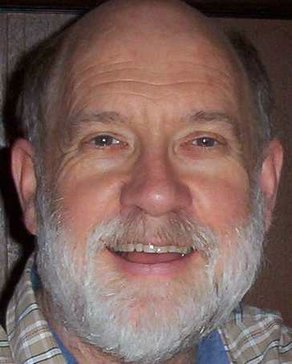
In a discussion on the Yahoo Groups Theology List, a couple of people have argued that it is only acceptable to use Traditional Music and Traditional Instruments in church.
I don't think that this argument is sustainable. I don't think it allows for the diversity in cultures in the church today. I understand that there are now more Christians in China than in any other country. After that comes Africa.
Does God expect them to sing old-fashioned British and American hymns only?
There are many kinds of music that I enjoy and some which I don't enjoy. But I can't say that the music which I enjoy is godly but the music which I don't enjoy is ungodly.
And I think it is also dangerous to say that the music which makes me feel spiritual [whatever that is] is acceptable to God and the music which leaves me cold is unacceptable.
I am a Bach lover and have recordings of all his extant works [not to mention other music that has been attributed to Bach]. Bach's music makes me feel religious, especially the vocal music, but it leaves others cold. Also, the music of his secular cantatas is often very similar to the music in his sacred cantatas. Cantatas about hunting or drinking coffee include music that is similar to, or even the same as music that is in a cantata in praise of the Holy Trinity.
I think music has associations which we have made and so may make us feel happy or excited or sexy, but I'm not sure it is the music itself which does this. My wife just remarked that music might make her feel sexy if she was close to me, but we aren't sure it is inherent in the sounds! [Nice when your wife whom you have been married to for 36 years says that!]
Some of what people say about music borders on racism, I think.
For many of us, it would be extremely difficult to praise God in the ancient music of Israel or in the music of other cultures.
I think it is legitimate to say that music which makes us focus on the sounds and forget the message can be inappropriate. Unfortunately, for many people this would include a lot of the supposedly kosher spiritual music, because it makes many people focus on the sounds, on their emotions and not truly on our God and Saviour.
For many people Handel's Messiah is a lovely concert and doesn't make them feel remotely like worshipping the God whom it tells us about. But when I am at a performance of this wonderful work which has been performed every year since its creation over 250 years ago, I stand up in the Hallelujah Chorus, not because an English king decided to stretch his legs while it was being sung: I'm standing up for the "King of Kings and Lord of Lords" the magnificent anthem is written about.
Loud music which drowns out the message must be inappropriate, but this is not at all to say that we can't enjoying shouting to the Lord in joyful song.
I'm interested to know what is meant by Contemporary Christian Music. Would you include the wonderful songs of Stuart Townend? His music is actually "wordly", because it is based on Celtic folk music to some degree, but I don't believe that rules it out from being used in praise of God, because the words are terrific.
David McKay
Theologically trained music teacher.
Tuesday, May 18, 2010


Friday, March 12, 2010
The pedal is the soul of the piano
I think many pianists would agree with this quote. But who said it? If you google it, you'll find it attributed to Arthur Rubinstein by several sources. But Stephen Hough says that it was Anton, not Arthur who made this comment.
The Wikipedia page about Anton Rubinstein is fascinating.
I couldn't resist adding Hough's citation of this aphorism to that page.
I particularly enjoyed the opening of the article, which sets you up for Rubinstein's comment about himself:
The Wikipedia page about Anton Rubinstein is fascinating.
I couldn't resist adding Hough's citation of this aphorism to that page.
I particularly enjoyed the opening of the article, which sets you up for Rubinstein's comment about himself:
Rubinstein was born to Jewish parents in the village of Vikhvatinets in the district of Podolsk, Russia, (now known as Ofatinţi in Transnistria, Republic of Moldova), on the Dniestr River, about 150 kilometers northwest of Odessa. Before he was 5 years old, his paternal grandfather ordered all members of the Rubinstein family to convert from Judaism to Russian Orthodoxy.
Rubinstein, brought up as a Christian at least in name, lived in a household where three languages were spoken—Yiddish, Russian and German. Much later, when his musical "Russianness" was called into question by musical nationalist Mily Balakirev and others in The Five, Rubinstein might have been thinking of this part of his childhood, among other things, when he wrote in his notebooks,
“Russians call me German, Germans call me Russian, Jews call me a Christian, Christians a Jew. Pianists call me a composer, composers call me a pianist. The classicists think me a futurist, and the futurists call me a reactionary. My conclusion is that I am neither fish nor fowl – a pitiful individual”
Tuesday, March 02, 2010
I love playing the piano!
OK, boys and girls, let's imagine an ideal world where every kid thinks like this:
This is my version of Helping Kids to Enjoy Playing which I call I love playing the piano!
I love playing the piano!
because…
1. Mum and Dad love hearing me play.
2. I can play any time I want.
3. Mum comes and listens when I do my practice.
4. Dad asks me to play his favourites.
5. They never tell me to stop because they’re watching TV.
6. My piano sounds great. Dad gets it tuned every year.
7. Mum and Dad don’t nag me about how much time I spend practising.
8. I can play lots of stuff.
9. I have a great teacher and we have fun piano lessons.
10. I think the piano is the best instrument!
11. It is fun to tinker and make up my own stuff.
12. Sometimes I can work out how to play songs I heard on TV
13. I have a great practice room. It’s warm in winter and cool in summer.
14. My school teacher asks me to play in class concerts
15. I have fun things to play in our school band
16. I got a Highly Commended award at last year’s eisteddfod
17. The music examiner wrote an encouraging report for my last exam
David McKay
--
www.aussiemusician.blogspot.com
This is my version of Helping Kids to Enjoy Playing which I call I love playing the piano!
I love playing the piano!
because…
1. Mum and Dad love hearing me play.
2. I can play any time I want.
3. Mum comes and listens when I do my practice.
4. Dad asks me to play his favourites.
5. They never tell me to stop because they’re watching TV.
6. My piano sounds great. Dad gets it tuned every year.
7. Mum and Dad don’t nag me about how much time I spend practising.
8. I can play lots of stuff.
9. I have a great teacher and we have fun piano lessons.
10. I think the piano is the best instrument!
11. It is fun to tinker and make up my own stuff.
12. Sometimes I can work out how to play songs I heard on TV
13. I have a great practice room. It’s warm in winter and cool in summer.
14. My school teacher asks me to play in class concerts
15. I have fun things to play in our school band
16. I got a Highly Commended award at last year’s eisteddfod
17. The music examiner wrote an encouraging report for my last exam
David McKay
--
www.aussiemusician.blogspot.com
Friday, February 19, 2010
Love Reconciled
We are enjoying The Marais Project's latest recording of works by Marin Marais and other 17th and 18th century composers. The cd is beautifully packaged and includes comprehensive information about the composers, works, performers and even the instruments used to perform the music.
The group have included one contemporary work - Stephen Yates' Love Reconciled or The Rewards of Evil, which is a world premiere recording.
But as good as the cd is, the best way to hear the music is to attend one of the group's concerts, because live performance gives so much more than can be captured in an audio recording.
The group have included one contemporary work - Stephen Yates' Love Reconciled or The Rewards of Evil, which is a world premiere recording.
But as good as the cd is, the best way to hear the music is to attend one of the group's concerts, because live performance gives so much more than can be captured in an audio recording.
Thursday, February 18, 2010
Good Vibrations from Celia Sheen
Couldn't resist the reference to Brian Wilson's iconic song, which also uses the theremin.
Thursday, January 14, 2010
... who danced with the Prince of Wales
You know the song?
I've danced with a man who's danced with a girl, who's danced with the Prince of Wales.
I sometimes hear people talking about their piano teachers and their piano teacher's teachers, so I looked up the teacher of my teacher and discovered that my musical great-grandfather is Alexander Glazunov, because my piano teacher Neta Maughan's teacher, Alexander Svergensky was one of his pupils.
Doesn't change much, but.
I've danced with a man who's danced with a girl, who's danced with the Prince of Wales.
I sometimes hear people talking about their piano teachers and their piano teacher's teachers, so I looked up the teacher of my teacher and discovered that my musical great-grandfather is Alexander Glazunov, because my piano teacher Neta Maughan's teacher, Alexander Svergensky was one of his pupils.
Doesn't change much, but.
Friday, January 01, 2010
Deja vu all over again ...
I miss our old 5-CD changer. It gave us good service for maybe 8 years, but then began misbehaving.
I used to enjoy putting in several CDs and then clicking the random button and having my own private radio station.
It worked well for the double CD Daydreams set by Jean-Yves Thibaudet, which has combined his recordings of arrangements of Bill Evans and Duke Ellington tunes.
The second CD [the Edward Kennedy Ellington set] has plenty of variety and is fine to listen to on its own, but while the individual tracks on the first CD are all wonderful, they don't work as a set, as the mood rarely varies, and is mostly subdued.
But randomise the set, perhaps by adding another jazz pianist, and Bob's your uncle.
I must have bought this set about 7 or so years ago, but I have exactly the same reaction now as I had back then. Hence, as Justin would say, hence the title.
I used to enjoy putting in several CDs and then clicking the random button and having my own private radio station.
It worked well for the double CD Daydreams set by Jean-Yves Thibaudet, which has combined his recordings of arrangements of Bill Evans and Duke Ellington tunes.
The second CD [the Edward Kennedy Ellington set] has plenty of variety and is fine to listen to on its own, but while the individual tracks on the first CD are all wonderful, they don't work as a set, as the mood rarely varies, and is mostly subdued.
But randomise the set, perhaps by adding another jazz pianist, and Bob's your uncle.
I must have bought this set about 7 or so years ago, but I have exactly the same reaction now as I had back then. Hence, as Justin would say, hence the title.
Subscribe to:
Posts (Atom)